NEWS
 2026.02.05
 Industry News
A worm gear reducer is a highly efficient mechanical device used for torque multiplication and speed reduction. It plays an essential role in various industrial applications where precise control over speed and torque is critical. These gear reducers are known for their ability to provide high torque output while reducing the speed of a motor, making them ideal for machinery that requires high load capacity and controlled motion.
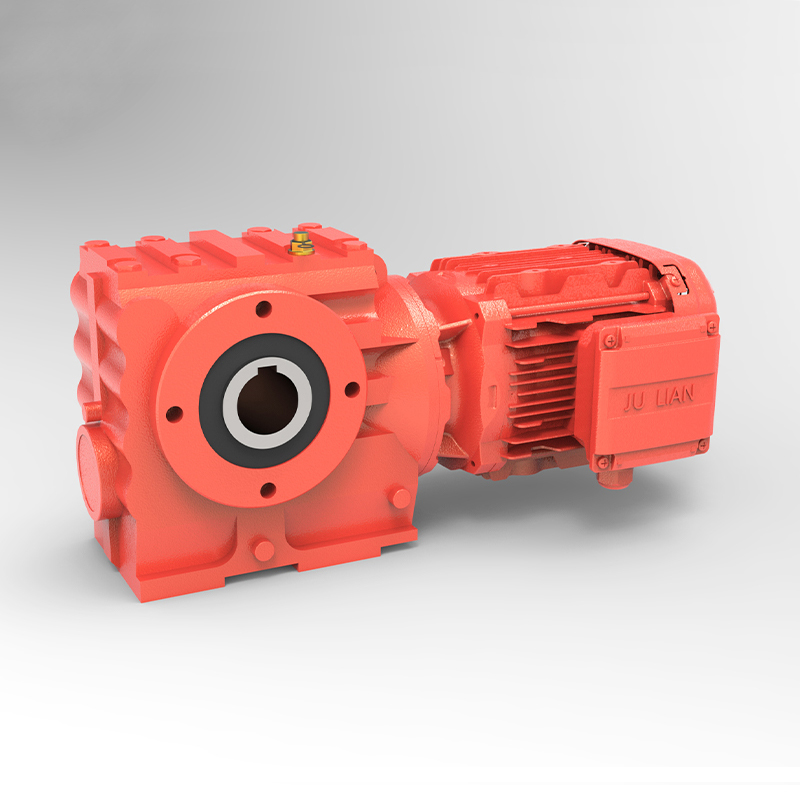
A worm gear reducer consists of a worm, which is a screw-like gear, and a gear that meshes with the worm, typically referred to as the worm wheel. The worm gear is unique because it typically operates at a 90-degree angle to the input shaft. This design allows it to reduce speed and increase torque in a compact space.
How the Mechanism Works:
The worm, which is driven by the input shaft, rotates and transfers motion to the worm wheel. The worm wheel, which is typically a helical gear, rotates slower than the input shaft, thus reducing the speed and increasing the torque output. This reduction ratio is determined by the number of teeth on the worm and the number of threads on the worm shaft.
Worm gear reducers offer several advantages, particularly when precise control over speed and torque is required. Here are the key benefits:
Worm gears are known for their ability to transmit high torque values while maintaining a relatively low input speed. This is because of the mechanical advantage provided by the screw-like worm gear, which generates a significant reduction in speed while simultaneously increasing torque. In many cases, worm gear reducers can provide reductions of up to 100:1 or more, making them ideal for heavy-duty applications.
Worm gear reducers have a compact design, making them suitable for applications with space constraints. Despite their small size, they can deliver substantial torque, making them an excellent choice for machinery with limited installation space but requiring significant power.
Worm gears are highly effective in controlling speed due to their ability to achieve precise reductions in the rotational speed of the input shaft. This makes them ideal for applications such as conveyor belts, winches, and mixers, where the motor speed needs to be precisely controlled.
Worm gears inherently have a self-locking feature, meaning they do not rotate in the opposite direction when no power is applied. This is useful in applications where it is necessary to prevent backdriving, such as in lifting mechanisms or when maintaining a fixed position is critical.
Worm gear reducers operate smoothly with minimal noise due to their design. This results in lower maintenance costs and ensures the system operates efficiently for longer periods. The self-lubricating nature of worm gears further reduces the need for regular maintenance.
While worm gear reducers are highly effective, selecting the right one for an application involves considering several factors to ensure optimal performance:
The load capacity of the worm gear reducer determines its ability to handle the mechanical stress and torque generated during operation. It is essential to select a gear reducer with an appropriate load capacity to ensure durability and prevent failure.
The efficiency of the worm gear reducer depends on its design, materials used, and the number of threads on the worm shaft. A higher reduction ratio allows for greater torque multiplication, but it can also affect efficiency. Therefore, selecting the right balance between efficiency and reduction ratio is crucial for ensuring the system operates smoothly.
The materials used in the construction of the worm and the worm wheel can affect the durability and performance of the gear reducer. Common materials include steel, brass, and bronze. Selecting the appropriate material is essential to ensure the reducer performs well under the given environmental and operational conditions.
The installation process of the worm gear reducer should also be taken into consideration. Many worm gear reducers offer flexibility in mounting, with options such as foot-mounted, flange-mounted, or shaft-mounted configurations. Selecting the appropriate mounting option ensures ease of installation and alignment with the machinery.
Worm gear reducers are used in a wide range of applications due to their unique ability to provide high torque and speed control. Some common industries and applications include:
| Parameter | Description |
|---|---|
| Input Speed Range | Typically 1,000 to 3,000 RPM |
| Output Speed Range | Varies depending on reduction ratio |
| Reduction Ratio | Up to 100:1 or more |
| Torque Capacity | High, based on design and load capacity |
| Efficiency | Typically 40% to 90%, depending on the ratio |
| Mounting Options | Foot-mounted, flange-mounted, shaft-mounted |
| Common Materials | Steel, Brass, Bronze |
Worm gear reducers are designed to handle high torque, with some capable of handling up to thousands of Nm depending on the design and size of the reducer.
Worm gear reducers are primarily used for speed reduction. While they excel in applications requiring low-speed, high-torque output, they may not be suitable for very high-speed operations due to efficiency losses at higher speeds.
The selection of the reduction ratio depends on the required output speed and torque. A higher reduction ratio will provide more torque but slower speed, while a lower ratio will provide faster speed but less torque.
Worm gear reducers are ideal for applications where high torque and speed control are needed, such as conveyors, lifts, and automated systems. However, they may not be the best option for applications that require very high efficiency or precision in high-speed operations.
Regular maintenance involves ensuring proper lubrication, checking for wear on the worm and worm wheel, and confirming that the system is operating within the recommended load capacity. Regular inspections can help extend the life of the reducer.
Recommended Products



 EN
EN  English
 Español
 русский