NEWS
 Home / News / Industry News / Why Hard Tooth Surface Helical Gear Reducers Deliver Higher Torque and Longer Service Life
 2026.11.26
 Industry News
In a soft-tooth gearbox, the gear flanks typically sit in a lower hardness range and wear progressively under load. A hardened-tooth design instead carburizes and quenches the gear teeth, then finishes them by precision grinding. The resulting surface hardness is commonly in the HRC 58 to 62 range, which resists pitting, scuffing and micro-cracking far better than softer alternatives.
Helical teeth are cut at an angle to the shaft axis, so engagement begins gradually and more teeth share the load at any moment. This produces smoother motion, lower vibration and noticeably quieter operation than straight-cut teeth. Because the load is spread over a longer contact line, a helical set can also run at higher efficiency, with well-designed units commonly reaching about 95 percent under rated conditions.
Smooth, gradual tooth engagement is the main reason helical gearing is preferred for continuous heavy-duty service.
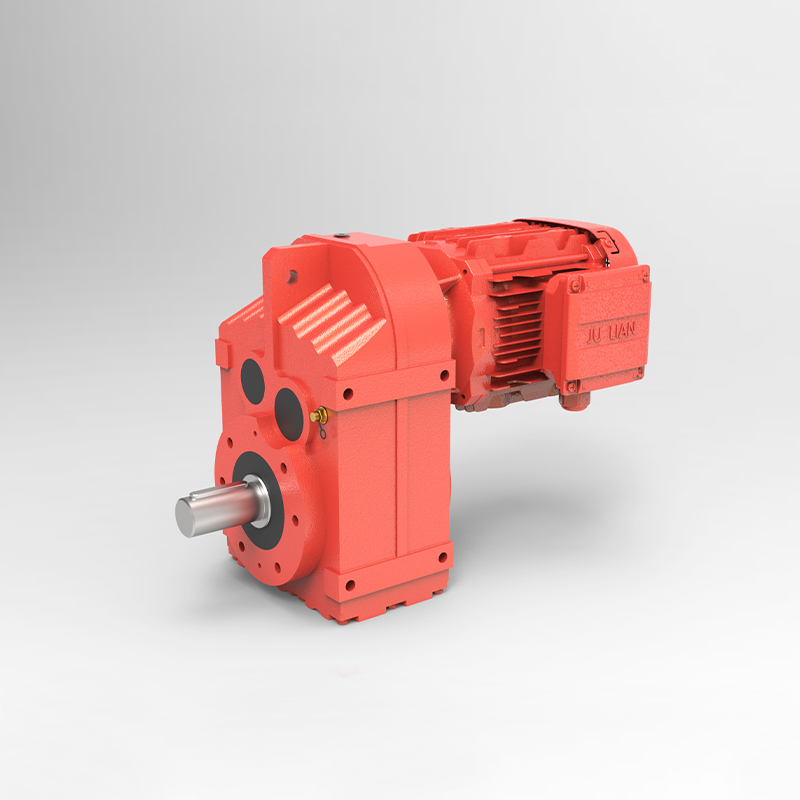
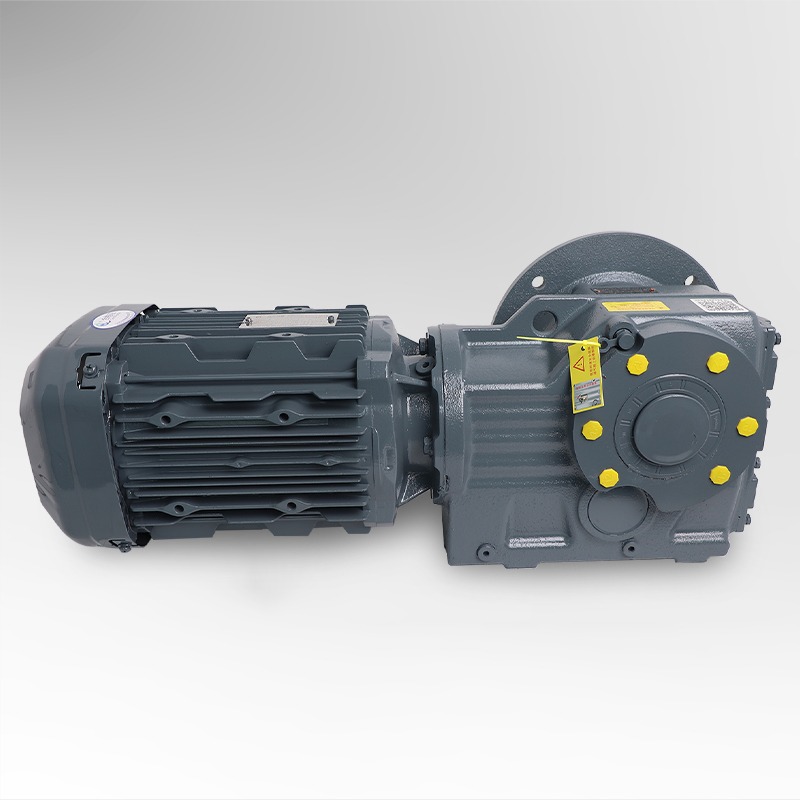
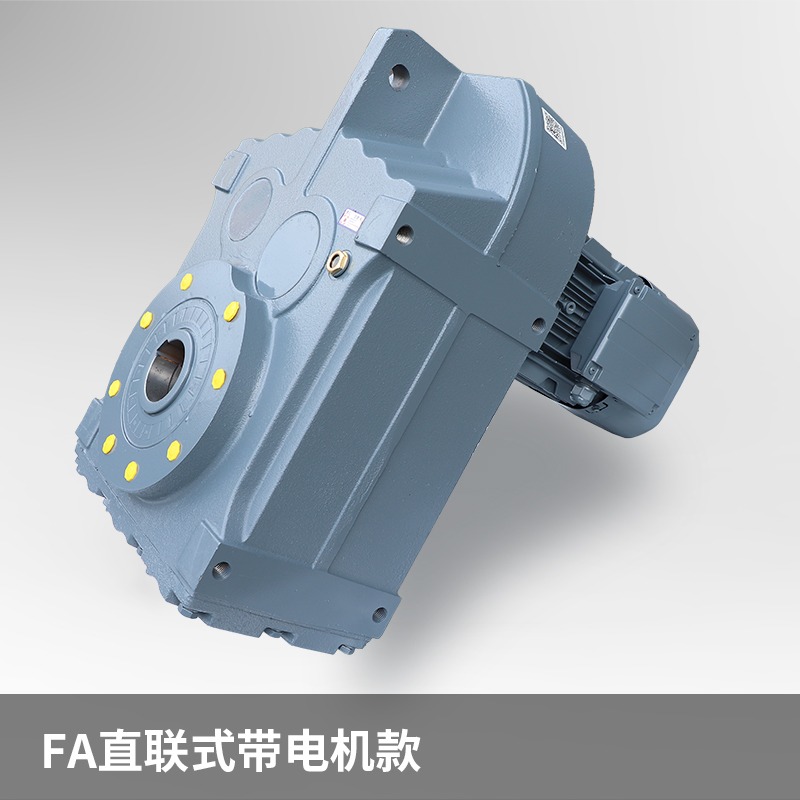
The FAF77 and FAF87 models belong to a parallel-shaft family of helical gear hard tooth surface reducer designs. Their main characteristics are summarized below.
Material selection determines how a gearbox behaves under real loads. The table below lists the typical configuration of a hard tooth surface helical gear reducer of this class.
| Component | Material and Treatment |
|---|---|
| Gears | 20CrMnTi alloy steel, carburized, quenched and precision ground |
| Gear shaft | 20CrMnTi, quenched and ground |
| Output shaft | 40Cr, quenched and tempered |
| Housing | HT200 gray cast iron |
| Motor winding | Pure copper coil with cold-rolled silicon steel laminations |
Gear and shaft materials are chosen for toughness at the core and high hardness at the surface, which is why carburizing alloy steel is preferred over through-hardened grades for high-torque service.
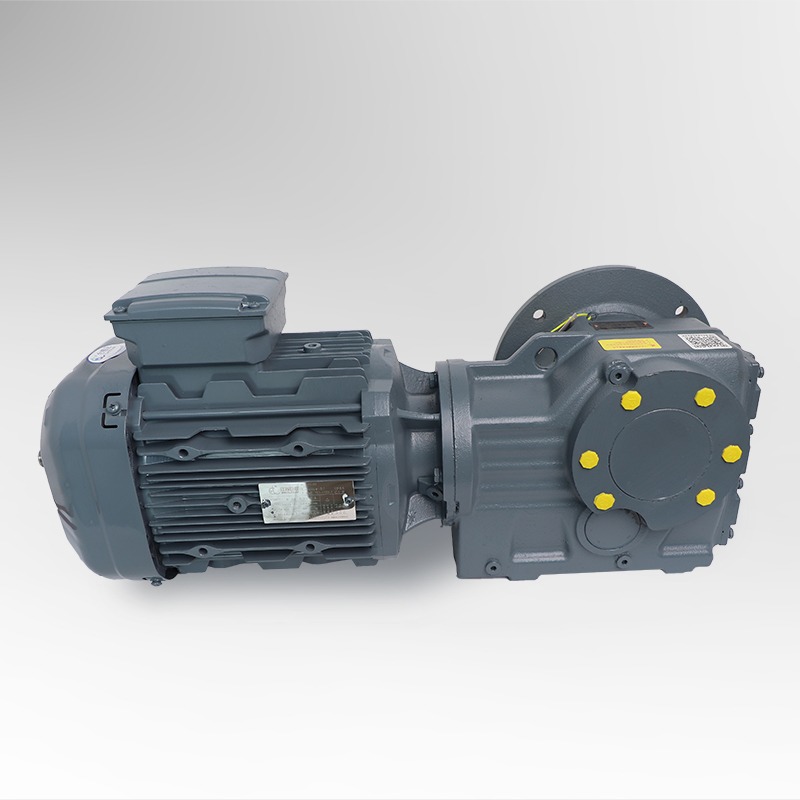
Screw conveyors are one of the most demanding uses for a gearbox. The screw can stall when material packs or jams, and the drive must survive repeated overload while running in dust. A motor-integrated hard tooth surface helical gear reducer for screw conveyor service is designed for exactly this combination of shock and continuous load.
Engineers should confirm that the expected axial load stays within the allowable limit, which for this class is up to about 5 percent of the radial load, and that the drive will run in its rated duty cycle.
Mounting arrangement often decides whether a drive fits the machine. Common forms include foot mounting, foot with hollow-shaft mounting, hollow-shaft mounting and B5 flange mounting. Each has a different load path, so the choice should be made before the frame is designed.
Bolted to a base for direct, stiff support
Slips onto the driven shaft for compact layouts
Combines a base with a direct shaft connection
Flange fixing for wall or frame installation
A structured selection process prevents both undersizing and costly overdesign. Work through the following inputs before requesting a quotation.
Sending these parameters to the manufacturer usually allows an engineering team to confirm the model and provide a price estimate quickly.
With correct selection, lubrication and installation, a well-built unit of this type can exceed 25,000 hours of operation, not counting wear parts such as seals and bearings that are replaced during routine maintenance.
Yes. Reduction ratio, shaft configuration, mounting form and motor matching can be adapted to suit specific machines, and small batch or repeat orders can be supported.
Helical parallel-shaft designs typically reach about 95 percent efficiency under rated load, with actual values depending on ratio, speed and lubrication.
Screw conveyors experience frequent overloads and dusty conditions. Hardened, ground teeth resist pitting and wear, so the drive keeps its capacity for longer.
Typical users include chemical processing, paper and building materials plants, environmental equipment, grain handling and metallurgy.
Prepare the required torque, output speed, motor power, mounting method and working environment, and attach a drawing if one is available.
Buyers comparing suppliers should look for in-house gear machining, a documented quality system such as ISO 9001, and engineering support for custom work. Manufacturers with integrated research, production and testing are generally better placed to deliver consistent quality and short lead times in batch supply.
A helical gear hard tooth surface reducer offers a practical combination of high load capacity, quiet running, long life and flexible mounting, which is why it suits screw conveyors and other heavy continuous-duty machines. Matching the torque, ratio, mounting and environment to your application is the key step before ordering.
Send your working conditions and drawings to request a quotation, a datasheet or a dimension drawing for the FAF77 or FAF87 model.
Recommended Products



 EN
 English
 Español
 русский